All deserts are dry, seeing as it is the lack of water that makes a desert, not the temperature. However, the climate varies a lot in different deserts. You can get hot, cold, polar, windswept and even deserts that are covered in fog. You can get hot days with bitter nights, or dry years with sudden floods. The deserts climate is very unpredictable.
1 inch of rainfall approx. falls in dry deserts per year. In sandy deserts, the rain drains away very quickly and only changes the landscape slightly. Why are deserts so dry? Dry deserts climates are formed by high-pressure zones in which cold air descends. The descending air becomes warm and then the heat from the ground evaporates the limited water there is, before it can be released down as rain. This is why hot deserts are so dry, and rain is so rare. Windy weather and extreme hot weather can speed up the evaporation of water from deserts, which can make them even dryer. The ground is super hot, because the sun's rays beat down directly overhead and there is no shade or atmosphere to protect it from it. By this we know that the most important factor of dry deserts is the high pressure which causes this cycle. |
||
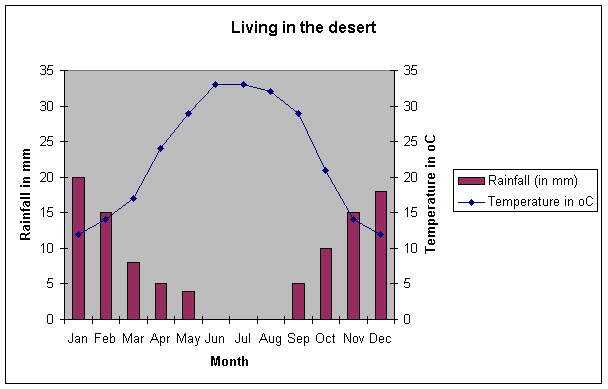
The graph above shows that the highest month of rainfall in the average desert is January. It also shows that deserts get barely any, if not no rain in June, July and August. As for temperature, as expected, the hottest months are June, July and August and the coldest month is January. The climate graph shows us that as the months get closer to June and July, the temperature goes up and when it reaches August it starts going down again.
|
EXAMPLES OF DESERTS WITH DIFFERENT CLIMATES:
|
|
